
Strategic Market Research and Industry Structure Analysis
Our team conducts custom market research and industry structure analysis, bridging the gap between raw data and actionable strategic insight. Whether for high-stakes litigation or corporate commercial strategy, we provide deep dives into market dynamics. We specialize in defining the competitive landscape, quantifying market power, and identifying the structural drivers that determine firm performance across diverse sectors such as banking, consumer electronics, and agriculture.
Our Analytical Frameworks:
We employ foundational economic and marketing theories to deconstruct complex market environments:
- Industry Structure Analysis (SCP Paradigm): We utilize the Structure-Conduct-Performance framework to evaluate how market concentration and barriers to entry dictate competitive behavior and ultimate profitability. (Bain, J. S. (1956). Barriers to New Competition. Harvard University Press.)
- Competitive Forces & Market Dynamics:We analyze the relative strength of market participants using metrics like the Herfindahl-Hirschman Index (HHI) to assess market concentration and potential antitrust implications. (Porter, M. E. Competitive Strategy: Techniques for Analyzing Industries and Competitors. New York: Free Press, 1980. (Republished with a new introduction, 1998.))
- Consumer Segmentation & Preference ModelingUtilizing advanced econometrics and Natural Language Processing (NLP), we conduct granular analyses of consumer segments to isolate the specific product attributes that drive demand. (McFadden, D. (1974). "Conditional logit analysis of qualitative consumer behavior." Frontiers in Econometrics. )
- Competitive Forces & Market Dynamics:We analyze the relative strength of market participants using metrics like the Herfindahl-Hirschman Index (HHI) to assess market concentration and potential antitrust implications. (Porter, M. E. Competitive Strategy: Techniques for Analyzing Industries and Competitors. New York: Free Press, 1980. (Republished with a new introduction, 1998.))
- Market Share & Presence Quantification: In the absence of direct sales records, we develop proprietary proxies—such as age-adjusted online review volume or census-based employment density—to estimate market share at the brand and model level. ( Kotler, P. (2003). Marketing Management. Prentice Hall.)
Retirement Initiative Statistics
(Client: Blackrock Investments, in partnership with University of Texas at Austin)
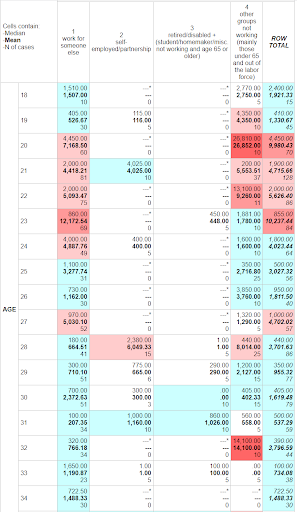
We conducted an empirical analysis for the BlackRock Retirement Initiative to quantify the demographic and financial landscapes of the U.S. population in relation to retirement preparedness. Our team synthesized a massive longitudinal database, primarily utilizing evidence from the Survey of Consumer Finances, to track changes in family finances, net wealth, and savings rates across varying age cohorts and income quintiles. We modeled the complex relationship between assets and liabilities, identifying significant non-linearities in asset holdings for younger, low-income households that may be influenced by generational wealth transfers. By applying rigorous statistical frameworks to compare labor force participation and financial well-being, we provided data-driven insights into retirement inequality and the accelerating wealth accumulation observed among older, higher-income demographics since 2016.
Hitachi
(Client: Arash Law Firm)
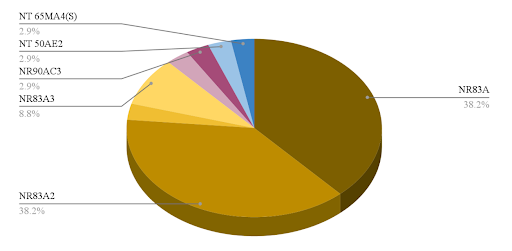
We provided comprehensive expert economic and statistical analysis for a product liability and public health matter to assess the market presence and injury rates associated with specific pneumatic framing nail gun product lines. Our methodology involved defining representative retail ecosystems and utilizing age-adjusted online customer reviews as a proxy for transactional sales data to estimate market shares by brand and model. To quantify the magnitude of public health impacts, we synthesized longitudinal data from the US Department of Labor's OSHA Investigation Summary database and the CPSC's National Electronic Injury Surveillance System (NEISS), employing statistical modeling to distinguish between consumer and occupational injuries. Furthermore, our team conducted a demographic overrepresentation analysis using American Community Survey data to evaluate systematic exposure and injury rate disparities among disadvantaged populations.
Luxury Goods Market Dominance Analyses
(Multiple Clients)
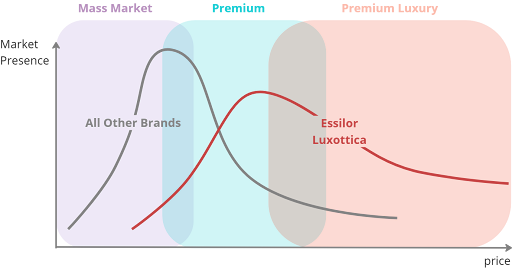
We have worked with many law firms to help them prepare their antitrust pleading, to develop arguments and conduct pre-litigation statistical analysis to identify market power, barriers to entry and harm to consumers and competition. For example, our firm has analyzed luxury hand bags markets (Hermes, Chanel, Dior, Bottega Veneta, Louis Vuitton etc.), luxury eye-wear markets (EssilorLuxottica, LVMH vs Kering) and luxury watches (Rolex, Patek Philippe and Audemars Piguet etc.).